
Lemington
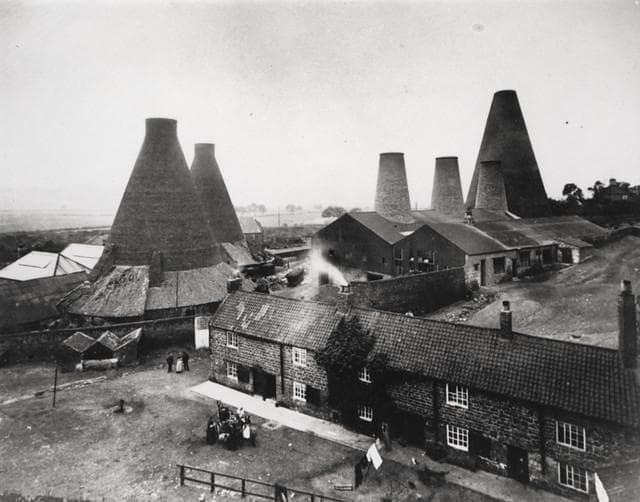
Lemington has a strong industrial history. It is famous for its brick glassworks cone, built in 1787. The River Tyne used to pass very close to Lemington, until the Tyne Improvement Commission cut a new, shorter, straighter channel over the Blaydon Haugh, leaving behind the Lemington Gut. Also visible are the ruins of the former Tyne Iron Company Ironworks which were built in 1797 and decommissioned in 1886. Its coke ovens are still evident near Lemington Power Station. The power station was built in 1903 to supply the tram system with electricity. It was largely demolished in 1946. The remains of Lemington Staithes can be seen on the Lemington Gut near the power station. The staithes used to mark the end of the North Wylam to Lemington Point wagonway, which took coal from the local collieries to the staithes for export. On 12 July 1875 Lemington Station opened on the Scotswood, Newburn & Wylam Railway. On 15 September 1958 the station closed to passengers and on 4 January 1960 the station was closed to goods.
Lemington Glassworks
Lemington Glass Works, opened in 1787 by the Northumberland Glass Company, was located in Lemington, near Newcastle upon Tyne. Initially producing flat glass, it benefited from local coal and river access. Ownership changed over the years, with periods of decline and revival. In 1906, it was adapted for light bulb and glass tube production by the General Electric Company. Operations ceased in 1997, marking the end of its era as the last working glassworks of its kind. This imposing structure is one of the most important industrial monuments in the North East and is a Grade II* listed building.
In 2022, the site was sold for approximately £1.2m to developers who have begun redeveloping the land for further industrial units.
The Glass Cone
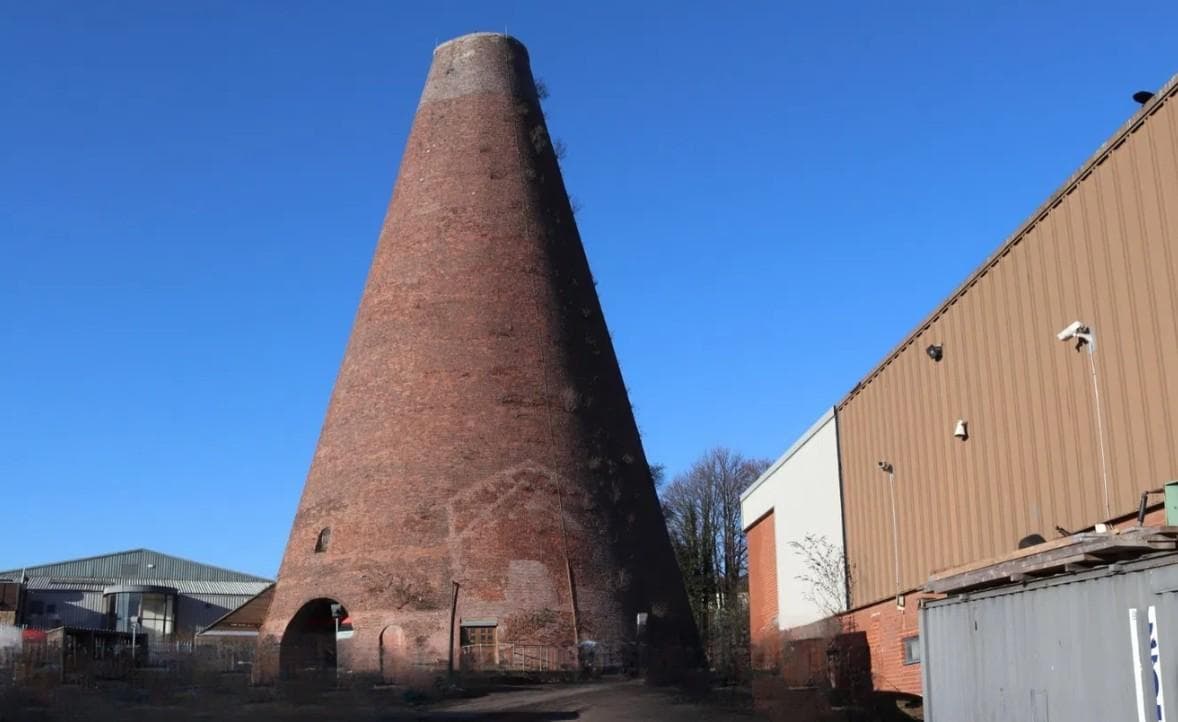
The only surviving element of the former glassworks site is a large English bond brick-built glass cone, standing over 35 m (115 ft) high, and 21 m (69 ft) in diameter. This particular cone was built in 1797 and was the largest of the works' four cones, having been constructed from an estimated 1.75 million bricks.
This cone is featured on the club badge as a homage to the strong industrial area Lemington once was and that the cone is such an important part of our history.